
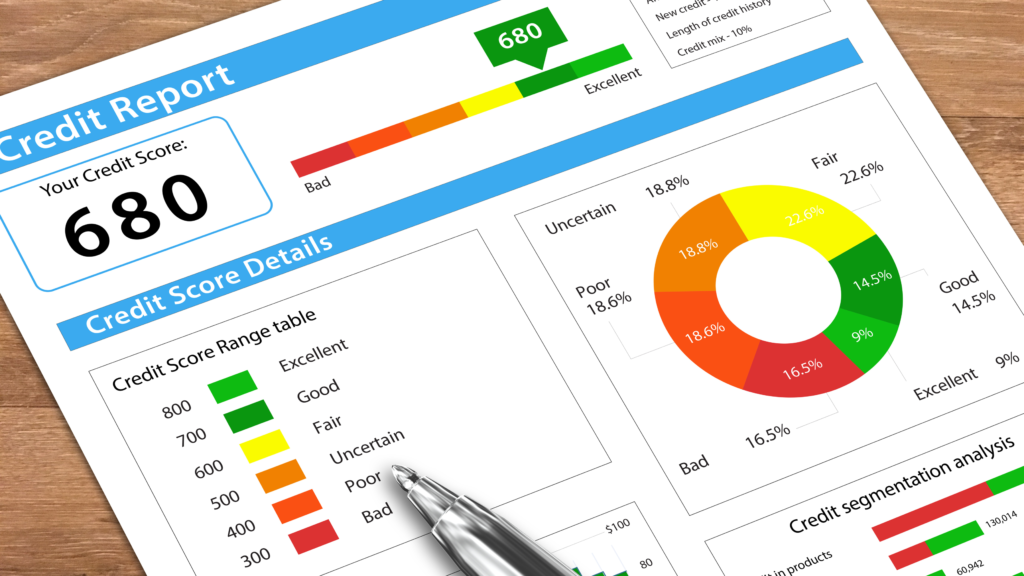
Your credit score is often treated like a number you either have or don’t have.
750 is good.
650 is bad.
Simple.
But that’s not how lenders see it.
A credit score is not just a number — it’s a summary of your financial behaviour over time. And more importantly, lenders don’t just read the score. They interpret the behaviour behind it.
That’s why two borrowers with the same score can get very different loan outcomes.
And in most cases, the difference comes down to a few common and often unnoticed mistakes.
What Is a Credit Score (And What It Actually Represents)
A credit score is a three-digit number, typically ranging from 300 to 900, generated by credit bureaus like CIBIL, Experian, Equifax, and CRIF Highmark.
It is based on your:
- Repayment history
- Credit usage
- Loan and credit card behaviour
- Length of credit history
- Recent credit activity
But here’s the key shift:
Your credit score is a summary
Your credit profile is the full story
And lenders always look at the full story.
How Lenders Actually Evaluate You
When a lender evaluates your profile, the credit score is just one part of the decision. What matters more is the behaviour behind the score.
Typically, lenders look at patterns like:
- Consistency of repayments
Not just whether you pay, but how regularly and comfortably - Credit dependency
How much you rely on credit in your day-to-day finances - Enquiry behaviour
How frequently you apply for new credit, and in what pattern - Cash flow alignment
Whether your EMIs are in sync with your income cycle - Stability of behaviour
Whether your profile has been steady over time
These patterns help lenders understand not just your past behaviour, but how predictable your future repayments are likely to be.
And this is where small decisions can start to influence your overall credit profile.
Common Credit Score Mistakes (And Why They Hurt More Than You Think)
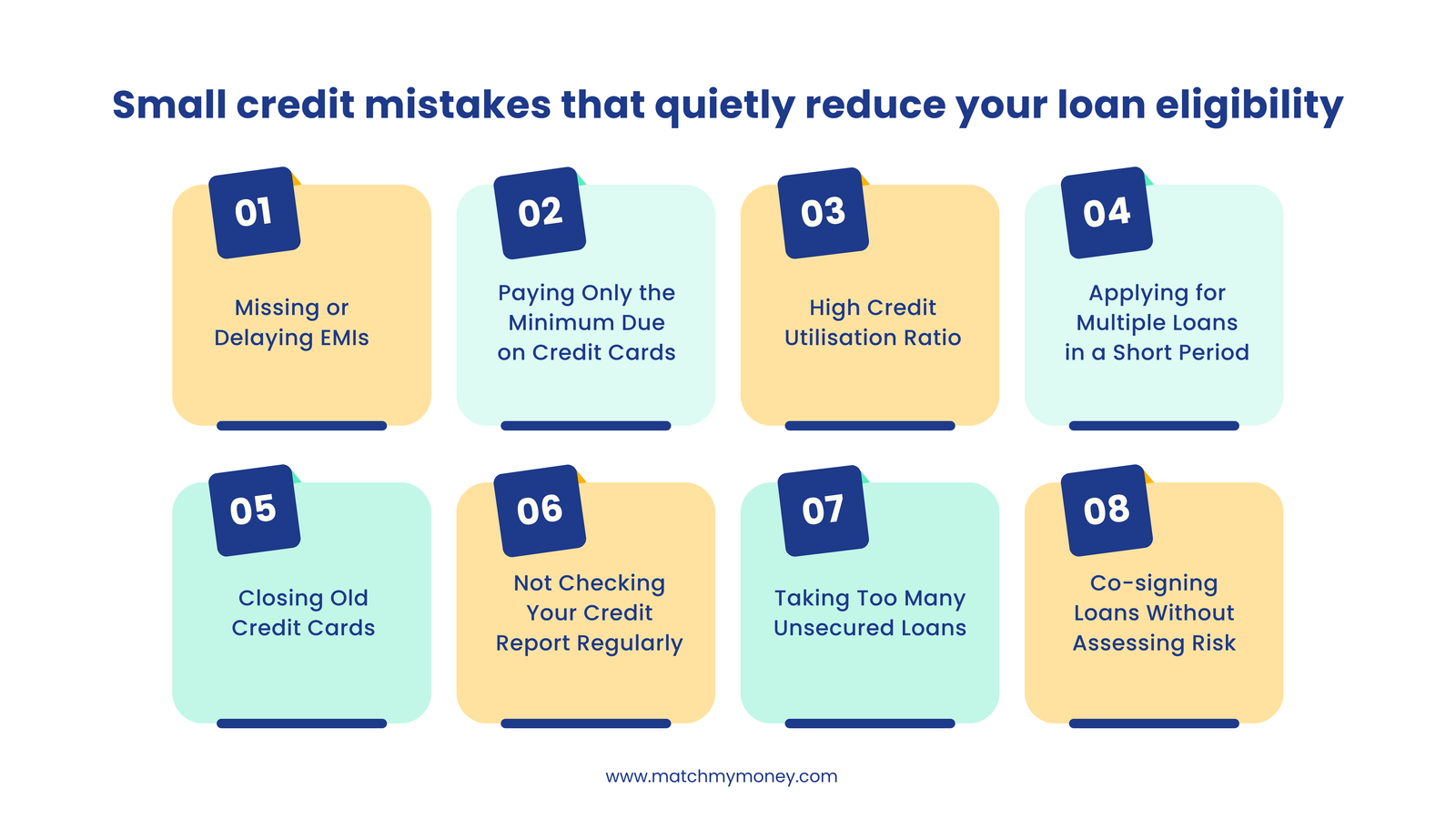
Instead of just listing mistakes, let’s understand them the way lenders do.
1. Missing or Delaying EMIs
A missed payment impacts your score. But repeated delays create a pattern. If delays happen consistently around the same time each month, lenders read it as:
- Cash flow stress
- Repayments being managed, not comfortably handled
From a lender’s perspective, this is risk even if you eventually pay.
2. Paying Only the Minimum Due on Credit Cards
Paying the minimum due avoids penalties. But it signals something else:
- You’re revolving debt
- Interest is accumulating
- Your utilisation stays high
Over time, this:
- Increases your total cost
- Weakens your credit profile
It’s not just about avoiding default, it’s about reducing dependency.
3. High Credit Utilisation Ratio
If you’re consistently using a large portion of your credit limit, lenders see:
- Dependence on credit
- Limited liquidity buffer
Even if you pay on time, high utilisation signals stress.
Ideally, keep your usage below 30–40% of your total limit
Because lenders track: how much you rely on credit, not just how you repay it.
4. Applying for Multiple Loans in a Short Period
Every loan application creates a hard enquiry. One or two enquiries are normal.
But multiple enquiries within a short span signal:
- Urgency for funds
- Possible rejections
- Uncertainty in profile
This reduces trust and negotiating power.
From a lender’s lens: If everyone is checking your profile, something isn’t working.
5. Closing Old Credit Cards
This feels like a responsible move. But it can backfire.
Closing older accounts:
- Reduces your credit history length
- Increases your utilisation ratio
- Weakens your profile depth
Older accounts show stability. Removing them removes proof of consistency.
6. Not Checking Your Credit Report Regularly
Many borrowers assume their report is accurate.
But errors can happen:
- Incorrect outstanding amounts
- Closed loans showing active
- Identity-related issues
- Fraudulent accounts
And lenders will see these whether you check them or not. Always review your report before applying.
7. Taking Too Many Unsecured Loans
Personal loans, credit cards, BNPL — all fall under unsecured credit.
Stacking too many of these signals:
- Higher dependency on credit
- Lower financial stability
Even if your score is decent, your risk perception increases.
A balanced credit mix builds stronger trust.
8. Co-signing Loans Without Assessing Risk
When you co-sign a loan, you share responsibility.
If the primary borrower:
- Misses payments
- Delays EMIs
It directly impacts your credit profile.
From a lender’s perspective, it’s your risk too.
What Most Borrowers Don’t Realise
This is where things change. Credit score is not just about:
- Paying on time
- Keeping utilisation low
It’s about how your behaviour is interpreted.
Two borrowers can:
- Both pay on time
- Both have similar scores
But:
- One shows stable, predictable behaviour
- The other shows stretched, reactive behaviour
And lenders treat them very differently.
How to Actually Improve Your Credit Profile (Not Just Your Score)
Instead of generic advice, here’s what actually works:
1. Align EMIs with your income cycle
If your salary comes on the 1st, avoid EMI dates on the 2nd–3rd.
2. Keep utilisation controlled across cycles
Don’t max out your card mid-cycle and repay later. It still gets reported.
3. Space out credit applications
Avoid applying to multiple lenders at once. Compare first, apply once.
4. Review your credit report before applying
Fix errors before lenders see them.
5. Focus on stability, not quick fixes
Sudden improvements raise questions. Gradual consistency builds trust.
When You Should NOT Worry Too Much About Your Credit Score
There are situations where you don’t need to overthink it:
- You’re not planning to take a loan anytime soon
- You’re just starting your credit journey
- There’s a minor short-term dip
Credit score is a long-term indicator. Short-term fluctuations are normal.
Frequently Asked Questions (FAQs)
Does checking my credit score reduce it?
No. Checking your own score is a soft enquiry and does not impact your score.
How long does it take to improve a credit score?
It typically takes 3 to 12 months, depending on consistency in repayment and behaviour.
Can I get a loan with a low credit score?
Yes, but options may be limited and interest rates higher. Lenders may also evaluate income and repayment capacity.
What is an ideal credit utilisation ratio?
Keeping utilisation below 30–40% is considered healthy.
Does closing a credit card improve my score?
Not necessarily. It can reduce your credit history length and increase utilisation, which may negatively impact your score.
Key Terms (Quick Glossary)
- Credit Utilisation Ratio: Percentage of credit used from total available limit
- Hard Enquiry: When a lender checks your credit report during application
- Credit Mix: Combination of secured and unsecured loans
- Credit History: Length of time you’ve been using credit
Final Thought
A good credit score helps. But a well-structured credit profile does much more.
Because in lending:
Approval is not just about your score
It’s about how predictable your behaviour looks
Before You Apply for Your Next Loan
Most borrowers make decisions based on:
- EMI
- Interest rate
But lenders evaluate:
- Behaviour
- Structure
- Risk signals
That’s why comparing lenders before applying matters.
Not just for rates — but for fit.
Compare the best personal loan options and find your best loan match.