

Nearly 50% of Indians are open to taking personal loans in 2026, but most don’t realise how easy it is to get the decision wrong.
Personal loans are no longer seen as a last resort. They are often taken to upgrade lifestyles, manage short-term expenses, or move plans forward without waiting years to save.
This reflects how borrowing has become part of everyday financial decisions rather than just emergencies.
But here’s where things get tricky. The problem isn’t borrowing itself, it’s how borrowing decisions are made. When asked how they decide, 34% of people said they depend on friends for advice before taking a loan, followed by family and colleagues. While well-meaning, this approach often skips comparing offers, understanding hidden costs, or checking whether the loan actually fits one’s income and goals.
That’s why many borrowers end up paying more than they expected. Most personal loan mistakes in 2026 don’t feel like mistakes at the start. They surface quietly over time, through higher interest, rigid terms, or EMIs that stop feeling manageable. In this blog, we’ll walk through the most common personal loan mistakes, why they happen, and how you can avoid them before they start costing you money.
Who This Blog Is For?
This blog is especially useful if you’re a salaried professional, freelancer, or self-employed individual planning to take a personal loan in 2026 and want to avoid unnecessary interest, hidden charges, or repayment pressure later.
Personal Loan Mistakes in 2026 You Need to Watch Out For
Most personal loan mistakes in 2026 don’t look risky at first, until the cost starts adding up.
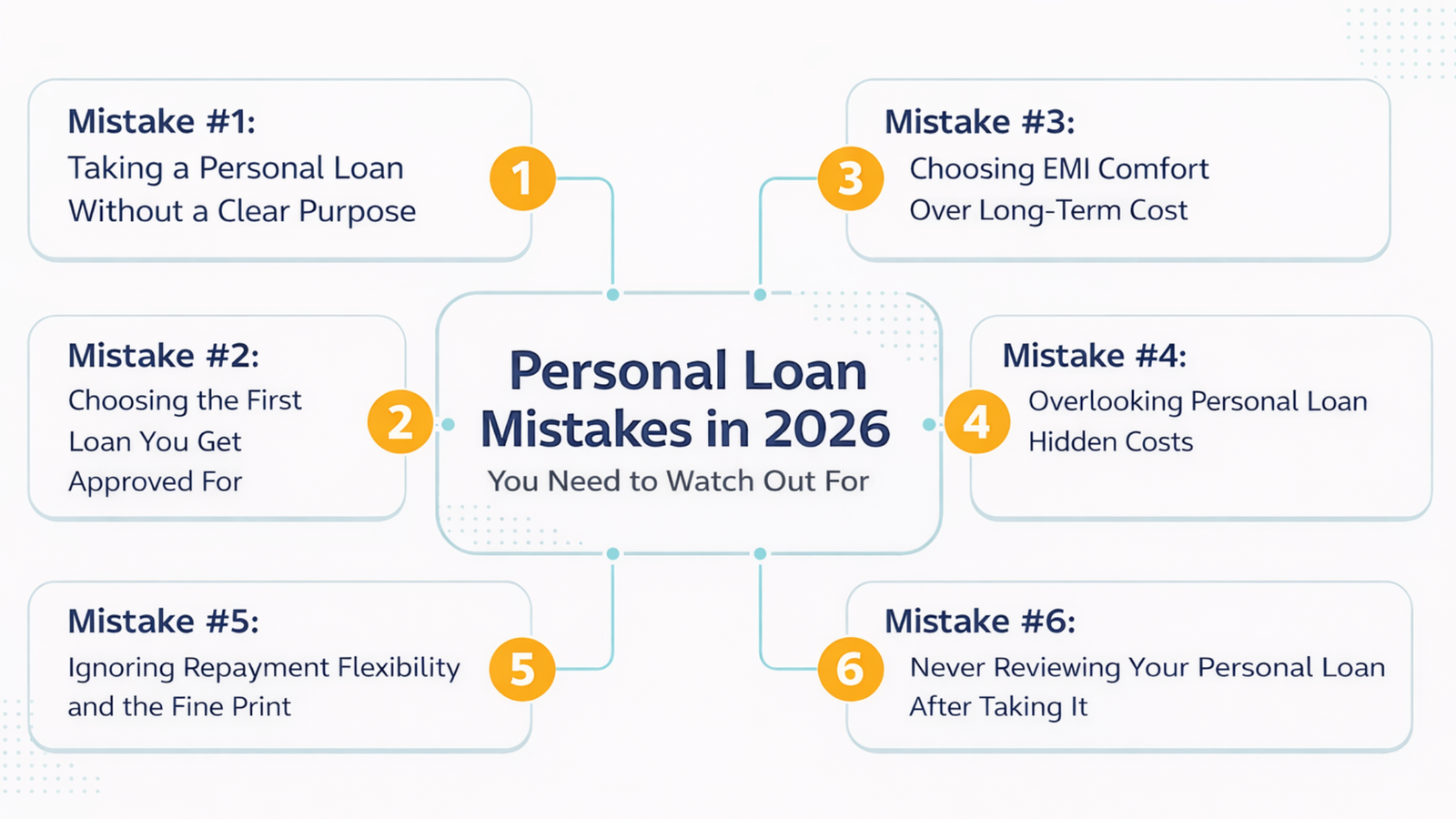
Mistake #1: Taking a Personal Loan Without a Clear Purpose
One of the most common personal loan mistakes in 2026 starts even before you compare lenders or interest rates. It begins with not being clear about why you need the loan in the first place.
You might want to upgrade your lifestyle, cover short-term expenses, or invest in your business. While all of these reasons can be valid, problems arise when the purpose is vague. A simple “I’ll figure it out later” often leads to borrowing more than necessary or choosing the wrong loan structure.
For example, taking a short-term loan for lifestyle spending can strain your monthly budget, while choosing a long tenure for a short-term need can increase the total interest you pay. In both cases, the loan may be approved quickly, but it ends up being the wrong personal loan choice for your situation.
How to avoid this mistake:
Before applying, clearly define what the loan is for and how long you actually need the money. Ask yourself whether the expense is essential, temporary, or genuinely growth-related. This clarity makes it much easier to compare personal loan offers and avoid mistakes before taking a personal loan.
Mistake #2: Choosing the First Loan You Get Approved For
Getting a quick approval often feels like a win. In 2026, many lenders promise instant decisions, minimal paperwork, and fast disbursals. When you are short on time or money, it is tempting to accept the first offer that comes your way. That urgency reduces comparison and lenders price for it.
Approval only means that a lender is willing to lend, nothing more. It does not mean the loan is affordable, flexible, or suited to your financial situation. Often, loans with the fastest approvals come with higher interest rates, shorter tenures, or stricter repayment terms. Over time, these slight differences can add up and cost you much more than expected.
How to avoid this mistake:
Instead of accepting the first approval, compare multiple personal loan offers side by side. Look beyond the approval message and focus on interest rates, tenure, repayment flexibility, total repayment amount, and additional charges. Taking extra time to compare can help you avoid mistakes before taking a personal loan and save you money in the long run.
Mistake #3: Choosing EMI Comfort Over Long-Term Cost
One of the biggest personal loan mistakes in 2026 is focusing only on the monthly EMI and ignoring how much the loan will actually cost you over time.
It is very common to hear borrowers say, “The EMI fits my budget, so it should be fine.” While affordable EMIs are important, they do not tell the whole story. Two loans with similar EMIs can have very different total repayment amounts, depending on the interest rate and tenure.
A longer loan tenure lowers your monthly EMI, making it feel safe and manageable at the start. But that comfort comes at the cost of higher interest paid over the life of the loan. A shorter tenure may reduce interest outgo, but it can strain monthly cash flow if income is inconsistent.
This becomes riskier when income or expenses change over time. What feels manageable today may not feel the same a year or two later, especially if responsibilities increase or income fluctuates.
EMI is a monthly feeling. Tenure is a long-term commitment.
Ignoring this balance is how a loan that looks affordable on paper quietly becomes expensive in real life.
How to avoid this mistake:
Always look at the total repayment amount, not just the EMI. Check how much interest you will pay over the full loan term and compare that across different lenders. Understanding the real cost of borrowing helps you avoid hidden financial stress and make a smarter personal loan choice.
Mistake #4: Overlooking Personal Loan Hidden Costs
Many borrowers assume that the interest rate is the only cost they need to worry about. In reality, personal loan hidden costs are one of the biggest reasons people end up paying more than they planned.
Most lenders charge additional fees that are easy to miss if you are focused only on getting quick approval. The most commonly missed costs include processing fees charged upfront, documentation fees, late payment charges, and penalties for early closure. . In some cases, these costs are added to the loan amount itself, increasing the interest you pay over time.
What makes this mistake common is how these charges are presented. They are usually mentioned in the fine print or briefly explained during the application process, when borrowers are already eager to move forward. Some charges increase your total interest, while others quietly affect cash flow later, both are easy to underestimate at the start.
How to avoid this mistake:
Before finalising a loan, review all charges carefully, not just the interest rate. Look for processing fees, prepayment penalties, late payment charges, and any additional taxes or service fees. Comparing personal loan offers side by side makes it easier to spot hidden costs and helps you choose a loan that truly fits your budget.
Mistake #5: Ignoring Repayment Flexibility and the Fine Print
When taking a personal loan, most borrowers focus on approval, EMI, and interest rate. Very few check how flexible the repayment terms actually are.
Income patterns are not fixed. Job switches, delayed payments, or unexpected expenses are common in 2026. If your loan does not allow flexibility, even a short delay can trigger late fees, penalties, and a negative impact on your credit profile.
Many borrowers also miss important details hidden in the loan agreement. These include restrictions on part-prepayments, charges for rescheduling EMIs, or strict penalties for missed payments.
A loan that looks affordable can become expensive simply because it doesn’t adapt when your circumstances change.
How to avoid this mistake:
Before finalising a loan, read the repayment terms carefully. Check whether part-prepayments are allowed, if EMIs can be adjusted, and what penalties apply for delays. Comparing personal loan offers based on repayment flexibility helps you choose a loan that stays manageable even when circumstances change.
Mistake #6: Never Reviewing Your Personal Loan After Taking It
Many borrowers assume that once a personal loan is approved, the work is done. In reality, not reviewing your loan over time is one of the quiet personal loan mistakes that can cost you money year after year.
Interest rates, lender policies, and repayment options change. What was a good deal when you took the loan may no longer be the best option in 2026. Yet, many people continue paying higher interest simply because they never revisit their loan terms or explore better offers.
As your financial situation improves, you may qualify for lower interest rates, better repayment flexibility, or opportunities to switch to a more suitable loan. Ignoring this can mean paying more interest than necessary.
Another missed opportunity is failing to consider prepayments or balance transfers when they make sense. Without regular reviews, borrowers often overlook ways to reduce their loan burden more quickly and efficiently.
How to avoid this mistake:
Make it a habit to review your personal loan at least once a year, or after a major income change. Check if better interest rates, lower charges or more flexible terms are available. Reviewing and comparing personal loan options regularly helps keep your loan aligned with your financial goals.
Make a Smarter Personal Loan Decision

Choosing a personal loan should not be about speed alone. It should be about understanding what you’re signing up for, which are interest, tenure, charges, and repayment flexibility.
Most personal loan mistakes don’t happen at approval. They happen before comparison.
Match My Money lets you compare personal loan offers in one place. You can view interest rates, repayment terms, and key charges side by side, making it easier to avoid common personal loan mistakes in 2026 and choose a loan that genuinely works for you.
If you are planning to take a personal loan, take a few minutes to compare your options with Match My Money and find your perfect loan match with confidence.
Start now and make a loan choice you will feel good about later.